Understanding Earthquake Epicenters
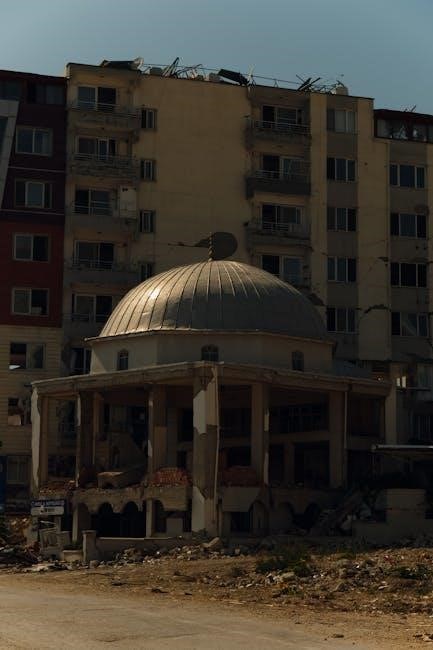
Earthquake epicenters pinpoint the surface location directly above the focus‚ where seismic energy first releases‚ crucial for understanding disaster impacts and response efforts.
Analyzing epicenter locations‚ like Jajarkot (Nepal‚ Nov 2023)‚ Port Vila (Vanuatu‚ Dec 2024)‚ and Sagaing (Myanmar‚ March 2025)‚ reveals regional vulnerability.

Determining the epicenter aids in assessing potential damage zones‚ guiding resource allocation‚ and informing preparedness strategies for future seismic events.
What is an Earthquake Epicenter?
The earthquake epicenter represents the precise geographical point on the Earth’s surface directly above the origin of the earthquake – the hypocenter or focus. It’s not where the earthquake happens‚ but rather where its effects are first felt and recorded at the surface. Think of it as the bullseye on a map indicating the center of seismic activity.
Recent events vividly illustrate this concept. The devastating 6.4 magnitude earthquake in Nepal (November 2023) had its epicenter in Jajarkot‚ significantly impacting that region and neighboring Rukum West. Similarly‚ the 7.3 magnitude quake near Port Vila‚ Vanuatu (December 2024)‚ centered its energy release near the capital‚ causing widespread damage. The Sagaing Region of Myanmar experienced powerful earthquakes (March 2025) with a defined epicenter impacting central Myanmar.
Locating the epicenter is the first critical step in earthquake analysis. It allows scientists and emergency responders to understand the scale of the event and begin assessing potential damage and risk. This information is fundamental when analyzing data from earthquake worksheets‚ where determining the epicenter is often a key objective.
The Difference Between Epicenter and Hypocenter
Understanding the distinction between the epicenter and the hypocenter is fundamental to grasping earthquake mechanics. The hypocenter‚ also known as the focus‚ is the actual location within the Earth where the earthquake originates – the point of rupture on a fault. Conversely‚ the epicenter is the point on the Earth’s surface directly above the hypocenter.
Imagine a lightbulb underground; the bulb itself is the hypocenter‚ and the point on the ceiling directly above it is the epicenter. Recent earthquakes highlight this: the Nepal earthquake (November 2023) had a hypocenter deep beneath Jajarkot‚ while the epicenter was located in Jajarkot itself. The Vanuatu earthquake (December 2024) and Myanmar earthquakes (March 2025) also demonstrate this vertical relationship.
Worksheets focusing on earthquake location often require differentiating these two points. Determining the epicenter relies on analyzing seismic data‚ while the hypocenter requires more complex calculations considering wave travel times and depths. Accurately identifying both is crucial for a complete understanding of the seismic event.
Locating the Epicenter: Triangulation Method
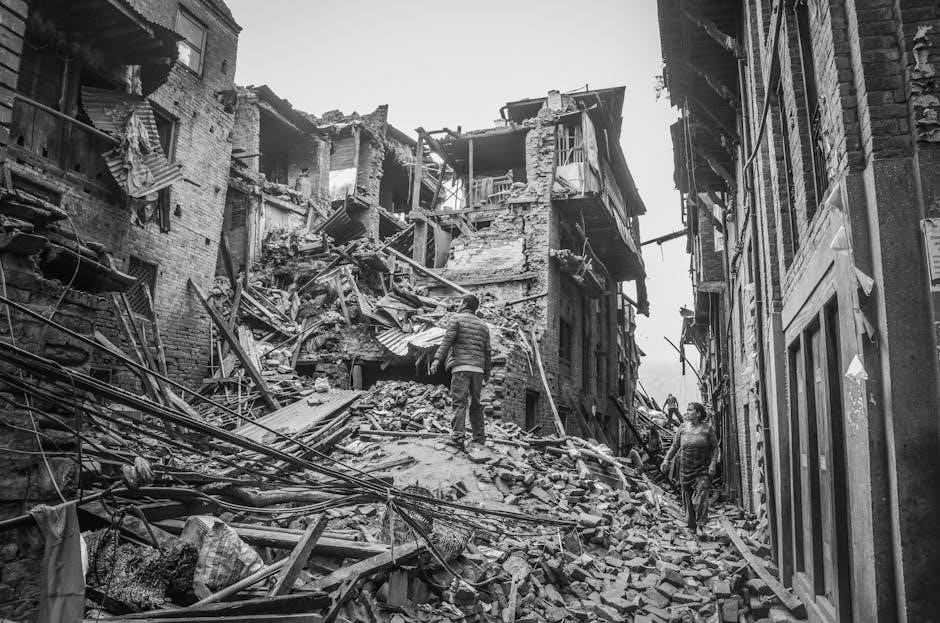
Triangulation uses data from multiple seismic stations to pinpoint an earthquake’s epicenter‚ analyzing arrival times of P and S waves for accurate location.
Worksheets often involve plotting radius circles representing distances from each station‚ where their intersection reveals the epicenter’s position.
This method is vital for rapid response following events like those in Nepal‚ Vanuatu‚ and Myanmar‚ aiding effective disaster management.
Using S-P Time Interval
The S-P time interval‚ a cornerstone of epicenter location‚ represents the difference in arrival times between secondary (S) and primary (P) seismic waves at a seismic station.
P-waves‚ being faster‚ arrive first‚ while S-waves follow‚ and this time difference directly correlates to the distance from the earthquake’s epicenter.
Worksheets commonly present seismic data tables requiring students to calculate this interval‚ typically measured in seconds or minutes.
A larger S-P time interval indicates a greater distance to the epicenter‚ as S-waves take longer to traverse greater distances.
Using travel-time graphs or established formulas‚ students convert the S-P time interval into a distance (in kilometers or miles).
For example‚ analyzing data from the Nepal (November 2023)‚ Vanuatu (December 2024)‚ or Myanmar (March 2025) earthquakes would involve similar calculations.
This calculated distance then forms the radius of a circle drawn on a map‚ centered on the seismic station‚ as part of the triangulation process.
Seismic Wave Speed Differences (P-waves vs. S-waves)
Understanding the velocity contrast between P-waves (primary) and S-waves (secondary) is fundamental to locating earthquake epicenters. P-waves are compressional‚ traveling through solids‚ liquids‚ and gases at speeds ranging from 4 to 8 km/s.
S-waves‚ conversely‚ are shear waves and can only propagate through solids‚ moving at approximately 2 to 5 km/s – significantly slower than P-waves.
This speed disparity is exploited in earthquake location; worksheets often emphasize this difference‚ asking students to explain why P-waves arrive before S-waves.
The speed variations are due to the differing modes of travel and the material properties they encounter.
Analyzing recent events like the Nepal (November 2023)‚ Vanuatu (December 2024)‚ and Myanmar (March 2025) earthquakes relies on accurately accounting for these speeds.
Worksheet problems frequently involve calculating travel times based on distance and wave speed‚ reinforcing this core concept.
Recognizing these speed differences is crucial for interpreting seismograms and accurately determining the earthquake’s origin.
How Many Seismic Stations are Needed?
Determining an earthquake’s epicenter requires data from at least three seismic stations. This is because triangulation‚ the primary method used‚ necessitates knowing the distance from multiple points to pinpoint a location.
Each station calculates its distance to the epicenter based on the time difference between P-wave and S-wave arrivals – a key skill assessed in worksheet exercises.
With data from only two stations‚ two possible epicenters emerge‚ creating ambiguity; a third station resolves this‚ providing a unique intersection point.
More stations enhance accuracy‚ reducing uncertainty and refining the epicenter’s location‚ vital for events like the Nepal (Nov 2023)‚ Vanuatu (Dec 2024)‚ and Myanmar (March 2025) earthquakes.
Worksheet answer keys often demonstrate this principle‚ showing how circles representing distances from each station intersect to define the epicenter.
The density of seismic networks directly impacts the precision of earthquake location‚ influencing disaster response and risk assessment.
Therefore‚ a robust network is essential for effective earthquake monitoring and mitigation.
Earthquake Worksheet Analysis
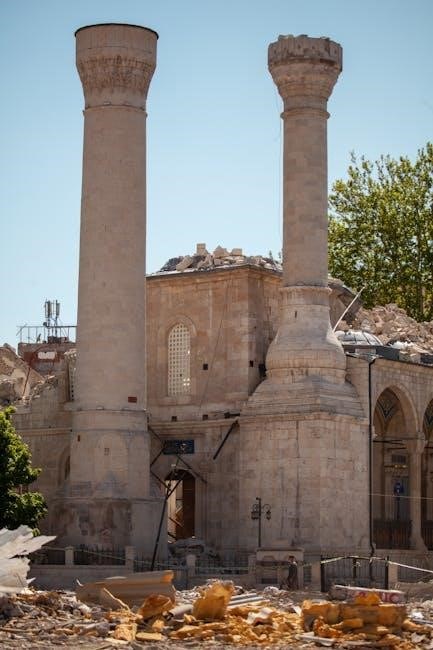
Worksheet analysis involves interpreting seismic data‚ arrival times‚ and distances to locate earthquake epicenters‚ mirroring real-world assessments of events like those in Myanmar.

Students practice triangulation‚ using S-P intervals and station data to pinpoint locations‚ enhancing understanding of seismic activity and worksheet solutions.
Interpreting Seismic Data Tables
Seismic data tables are fundamental to locating earthquake epicenters‚ presenting crucial information about P-wave and S-wave arrival times at various seismic stations. These tables typically include station identifiers‚ the time the P-wave arrives‚ the time the S-wave arrives‚ and often‚ calculated distances to the epicenter.
Understanding these tables requires recognizing that P-waves (primary waves) are faster and arrive before S-waves (secondary waves). The S-P time interval – the difference between the S-wave and P-wave arrival times – is key. A larger interval indicates a greater distance from the earthquake’s epicenter. Students analyzing worksheets must carefully extract these arrival times.
Furthermore‚ tables may include pre-calculated distances based on travel-time graphs or established velocity models. Correctly identifying and recording these values is vital for accurate triangulation. Errors in reading the table‚ such as misinterpreting time formats or station codes‚ can significantly impact the final epicenter location‚ mirroring challenges faced during real-world events like the Nepal (November 2023) or Vanuatu (December 2024) earthquakes.
Analyzing Arrival Times on a Map
Analyzing arrival times on a map involves plotting data from seismic stations to pinpoint an earthquake’s epicenter. Using the distances calculated from S-P time intervals (or provided directly in data tables)‚ students draw circles around each station‚ with the radius representing the distance to the epicenter.
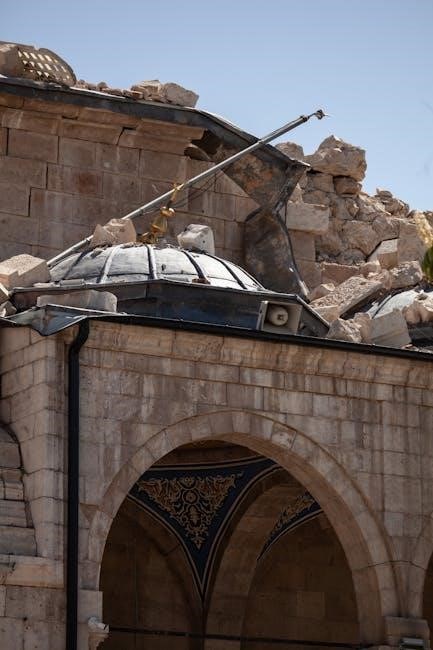
The point where three or more circles intersect indicates the likely epicenter location. This triangulation method relies on accurate distance measurements and precise map plotting. Discrepancies in circle intersections suggest errors in data or calculations‚ requiring re-evaluation.
Worksheet exercises often simplify this process with pre-scaled maps. However‚ understanding the underlying principle remains crucial. Real-world epicenter determination‚ as seen with the Myanmar earthquakes (March 2025)‚ utilizes sophisticated software and numerous stations. Students should focus on accurately transferring data and recognizing the convergence point‚ acknowledging potential inaccuracies inherent in the simplified model.
Determining Distance to the Epicenter
Determining distance to the epicenter is fundamental to earthquake location. Worksheets typically provide S-P time intervals – the difference in arrival times between secondary (S) and primary (P) waves. This interval directly correlates to distance‚ as P-waves travel faster.
Students utilize travel-time graphs (often included in the worksheet or provided separately) to convert the S-P interval into kilometers or miles. These graphs illustrate the relationship between time difference and distance. Accurate reading of these graphs is vital for precise distance calculation.
For example‚ a larger S-P interval indicates a greater distance from the station to the epicenter. Applying this to recent events‚ like the Nepal earthquake (November 2023) or the Vanuatu earthquake (December 2024)‚ demonstrates the practical application of this skill. Correctly calculated distances are then used for triangulation.
Practical Application: Worksheet PDF Answer Key
Worksheet solutions demonstrate applying S-P time intervals and travel-time graphs to pinpoint epicenters‚ mirroring real-world analysis of events like those in Myanmar and Vanuatu.
Common Errors in Worksheet Solutions
Incorrectly reading seismic data tables is a frequent mistake‚ leading to inaccurate S-P time interval calculations. Students often misinterpret the time format or confuse P-wave and S-wave arrival times‚ significantly impacting distance estimations.
Misapplying the travel-time graph is another common issue. Failing to accurately locate the S-P time interval on the graph‚ or reading the corresponding distance incorrectly‚ results in flawed epicenter location attempts.
Forgetting to convert units (e.g.‚ seconds to minutes) can introduce substantial errors. Additionally‚ students sometimes struggle with the triangulation process‚ drawing radius circles with incorrect radii or failing to identify the precise intersection point representing the epicenter.
Ignoring aftershocks and focusing solely on the primary earthquake’s data can lead to confusion. Understanding that each station provides a distance‚ not a bearing‚ is crucial for accurate triangulation‚ as seen in recent events like the Nepal and Vanuatu earthquakes.

Step-by-Step Solution Guide
Step 1: Carefully examine the seismic data table‚ noting P-wave and S-wave arrival times at each station. Calculate the S-P time interval for each station – the difference between S-wave and P-wave arrival times.
Step 2: Utilize a travel-time graph (provided with the worksheet) to determine the distance to the epicenter from each seismic station. Locate the calculated S-P time interval on the graph and read the corresponding distance.
Step 3: On a map‚ plot each seismic station. Draw a circle around each station with a radius equal to the calculated distance to the epicenter. These are your radius circles.
Step 4: The point where three or more circles intersect represents the approximate location of the earthquake epicenter. This triangulation method‚ crucial in events like the Myanmar earthquakes‚ provides a reliable estimate.
Step 5: Verify your solution by considering the geographic context and recent earthquake reports (e.g.‚ Jajarkot‚ Nepal; Port Vila‚ Vanuatu).
Understanding Radius Circles on Maps
Radius circles are fundamental to epicenter location‚ representing all possible points where the earthquake’s focus could be‚ given a station’s distance. Each circle’s center is the seismic station‚ and its radius corresponds to the calculated distance from the S-P time interval.
The intersection of three or more circles pinpoints the epicenter. This is because the true epicenter is the only location satisfying the distance requirements from multiple stations. Inaccurate circles lead to imprecise epicenter locations.
Consider real-world examples: analyzing the Nepal (Jajarkot) and Vanuatu (Port Vila) earthquakes requires precise circle drawing. Larger earthquakes‚ like those in Myanmar’s Sagaing region‚ necessitate more stations for accuracy.
Circle size directly reflects the earthquake’s distance from the station. Smaller circles indicate proximity‚ while larger ones signify greater distance. Careful map reading and accurate plotting are vital for successful triangulation.
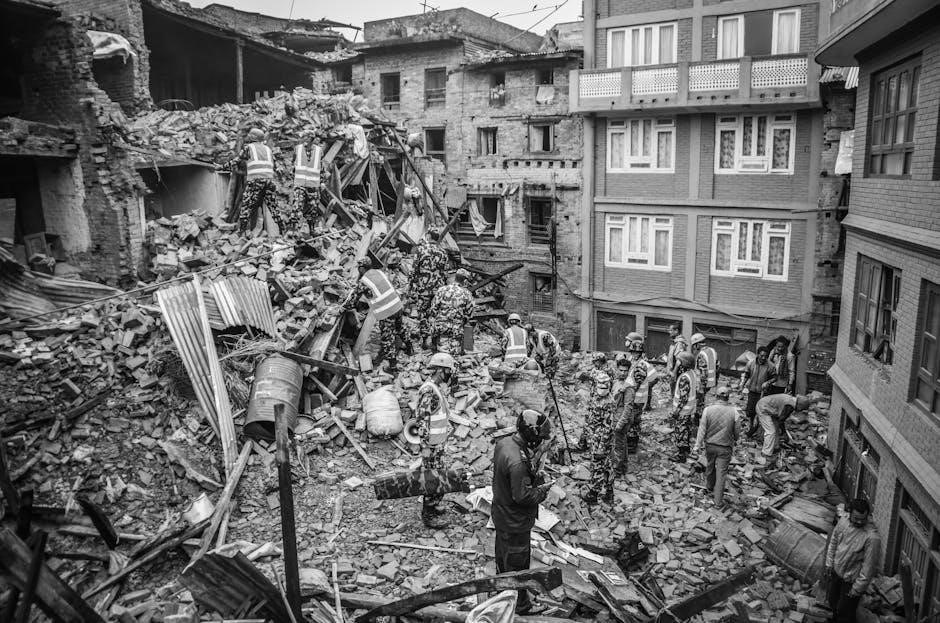
Recent Earthquake Examples & Epicenter Locations
Recent seismic events – Nepal (Jajarkot)‚ Vanuatu (Port Vila)‚ and Myanmar (Sagaing) – demonstrate the importance of accurate epicenter determination for effective disaster response.
Analyzing these epicenter locations helps understand regional seismic hazards and refine earthquake preparedness strategies globally.
Nepal Earthquake (November 2023) ‒ Jajarkot as Epicenter
The 6.4 magnitude earthquake striking Nepal’s Karnali Province on November 3‚ 2023‚ tragically highlighted the devastating impact of seismic activity‚ with Jajarkot identified as the epicenter.
As of November 24‚ 2023‚ the disaster resulted in 154 fatalities (83 female‚ 71 male) and over 900 injuries‚ profoundly affecting Jajarkot and Rukum West districts.
Locating the epicenter is crucial for understanding the earthquake’s source and predicting the intensity of ground shaking in surrounding areas‚ informing immediate relief efforts.
Worksheet analysis‚ utilizing seismic data‚ would involve pinpointing Jajarkot based on S-P time intervals recorded at multiple seismic stations across Nepal and neighboring regions.
Determining the distance to the epicenter from each station‚ then triangulating the results on a map‚ confirms Jajarkot as the origin point‚ guiding resource allocation and aid distribution.
The WHO responded swiftly‚ supporting the government and partners to address the urgent health needs of the affected population‚ emphasizing the importance of preparedness.
Vanuatu Earthquake (December 2024) ‒ Port Vila Impact
A powerful 7.3 magnitude earthquake near Port Vila‚ Vanuatu‚ on December 17‚ 2024‚ impacted over a quarter of the nation’s population‚ causing significant damage to infrastructure and displacing over 2000 people.
Fourteen lives were lost‚ and communities faced critical shortages of food‚ water‚ and sanitation‚ necessitating immediate humanitarian assistance and long-term recovery efforts.
Locating the epicenter accurately is vital for assessing the extent of damage and directing aid to the most affected areas‚ particularly in a geographically dispersed island nation.
An earthquake worksheet analysis would utilize seismic data to pinpoint the epicenter’s coordinates‚ employing S-P time interval calculations from regional seismic stations.
Determining distances to the epicenter from multiple stations and then triangulating these distances on a map would confirm the earthquake’s origin point near Port Vila.
The rapid response initiated immediately after the earthquake underscores the importance of preparedness and efficient data analysis for effective disaster management.
Myanmar Earthquakes (March 2025) — Sagaing Region
Two powerful earthquakes struck Myanmar’s Sagaing Region on March 28‚ 2025: a 7.7 magnitude quake at 12:50 p.m. local time‚ followed by a 6.4 magnitude aftershock at 1:02 p.m. Multiple aftershocks complicated rescue operations.
Accurately locating the epicenter of these events is crucial for understanding the fault lines involved and assessing the risk of further seismic activity in the region.
An earthquake worksheet‚ utilizing seismic data‚ would require students to analyze arrival times of P and S waves recorded at various seismic stations near Sagaing.
Calculating the S-P time interval and applying wave speed differences would determine the distance from each station to the epicenter‚ enabling triangulation on a map;
The worksheet’s answer key would demonstrate how radius circles‚ drawn from each station‚ intersect to pinpoint the earthquake’s origin within the Sagaing Region.
This exercise reinforces the practical application of seismic principles in real-world disaster scenarios and the importance of precise data analysis.
Resources for Further Learning
Explore the USGS Earthquake Hazards Program for comprehensive data and educational materials. Access earthquake preparedness guides to enhance safety knowledge and response skills.
Utilize online resources and interactive worksheets to practice epicenter location techniques‚ solidifying understanding of seismic principles and data analysis.
USGS Earthquake Hazards Program
The United States Geological Survey (USGS) Earthquake Hazards Program stands as a premier resource for in-depth earthquake information‚ crucial for understanding and locating epicenters. Their website provides real-time earthquake maps‚ displaying recent seismic activity globally‚ including events like the November 2023 Nepal earthquake centered near Jajarkot‚ the December 2024 Vanuatu quake impacting Port Vila‚ and the March 2025 Myanmar earthquakes in the Sagaing Region.
Beyond immediate data‚ the USGS offers extensive educational resources‚ including detailed explanations of earthquake science‚ fault lines‚ and the mechanics of seismic waves. This knowledge is fundamental when tackling earthquake worksheets focused on epicenter determination. You’ll find explanations of the S-P time interval method‚ vital for calculating distances to the epicenter using seismic station data.
Furthermore‚ the USGS provides access to historical earthquake catalogs‚ allowing for comparative analysis and a broader understanding of seismic patterns. This program is invaluable for students‚ educators‚ and anyone seeking to deepen their knowledge of earthquake hazards and the science behind locating their origins.
Earthquake Preparedness Guides
Effective earthquake preparedness extends beyond simply knowing how to locate an epicenter; it’s about mitigating risk and responding effectively. Numerous organizations offer comprehensive guides‚ emphasizing the importance of understanding local seismic hazards‚ like those experienced in Nepal (Jajarkot‚ Nov 2023)‚ Vanuatu (Port Vila‚ Dec 2024)‚ and Myanmar (Sagaing‚ March 2025).
These guides often detail creating emergency kits‚ developing family communication plans‚ and securing your home against shaking. Understanding the science behind epicenter location – utilizing S-P time intervals and triangulation – enhances awareness of potential impact zones. Knowing where earthquakes originate helps assess personal risk.
Resources from organizations like FEMA and the Red Cross provide step-by-step instructions for pre- and post-earthquake actions. They also highlight the importance of community involvement in disaster preparedness. Mastering earthquake worksheets‚ including those focused on epicenter determination‚ is a practical step towards building resilience and safeguarding lives.
 the house across the lake pdf
  heard on the wall street pdf
  sie exam study guide pdf
  48 laws of power summary pdf
  citi program quiz answers pdf
  upper back stretches pdf
  activité pour autiste à imprimer pdf
  low-fat diet food list pdf
  mitsubishi d700 instruction manual